Habits and Continuous Improvement Overview
Habits aren’t built on one-time enthusiasm. A more reliable approach is to make actions small, place them at the right moment, and adjust through regular review.
A Real Scenario
Section titled “A Real Scenario”If you want to organize tasks daily, don’t start by requiring a full review; first, set a routine to clear three items from your inbox at the end of each day.
Small Actions Need a Home
Section titled “Small Actions Need a Home”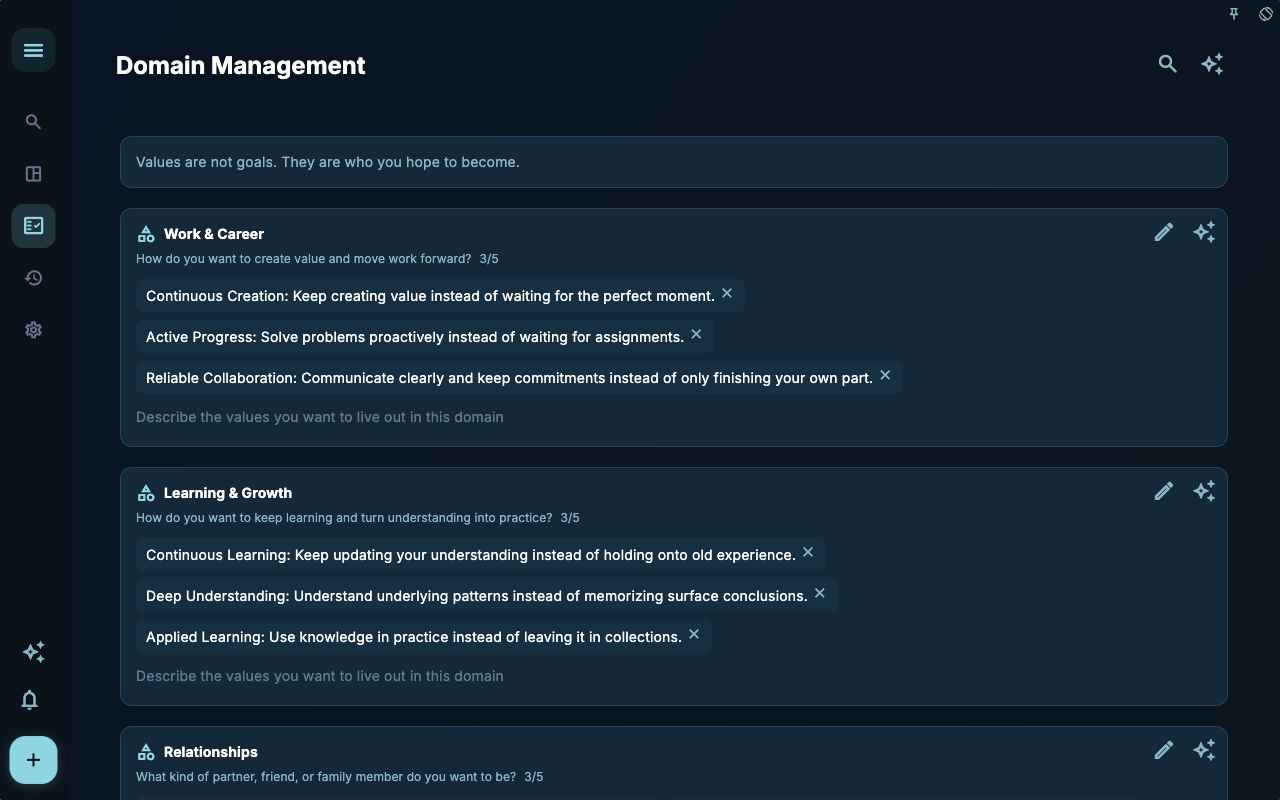
The Domains page helps you decide which part of your life this habit serves. A small action without a home easily becomes an isolated check-in.
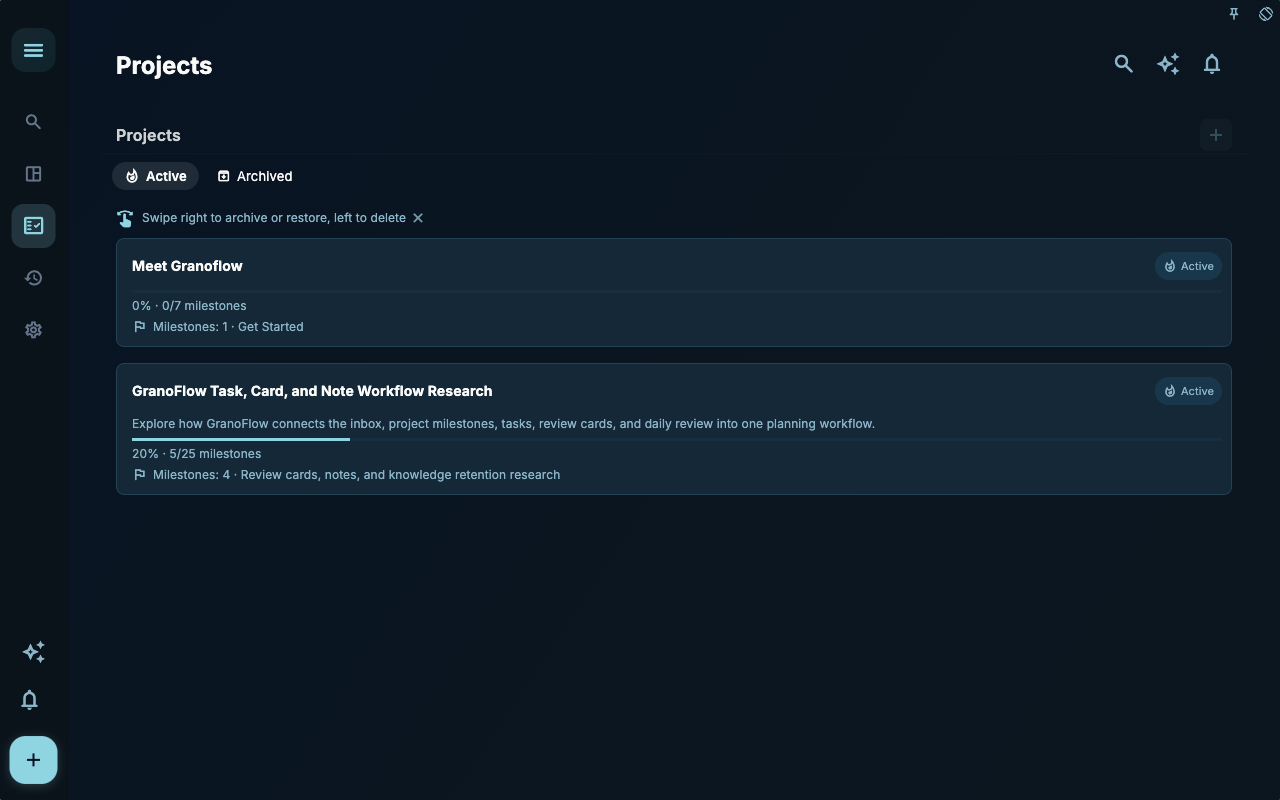
The Projects page is suited for habits that have become ongoing commitments. For example, reading papers daily—once it starts generating summaries or experiments, it should move into a project.
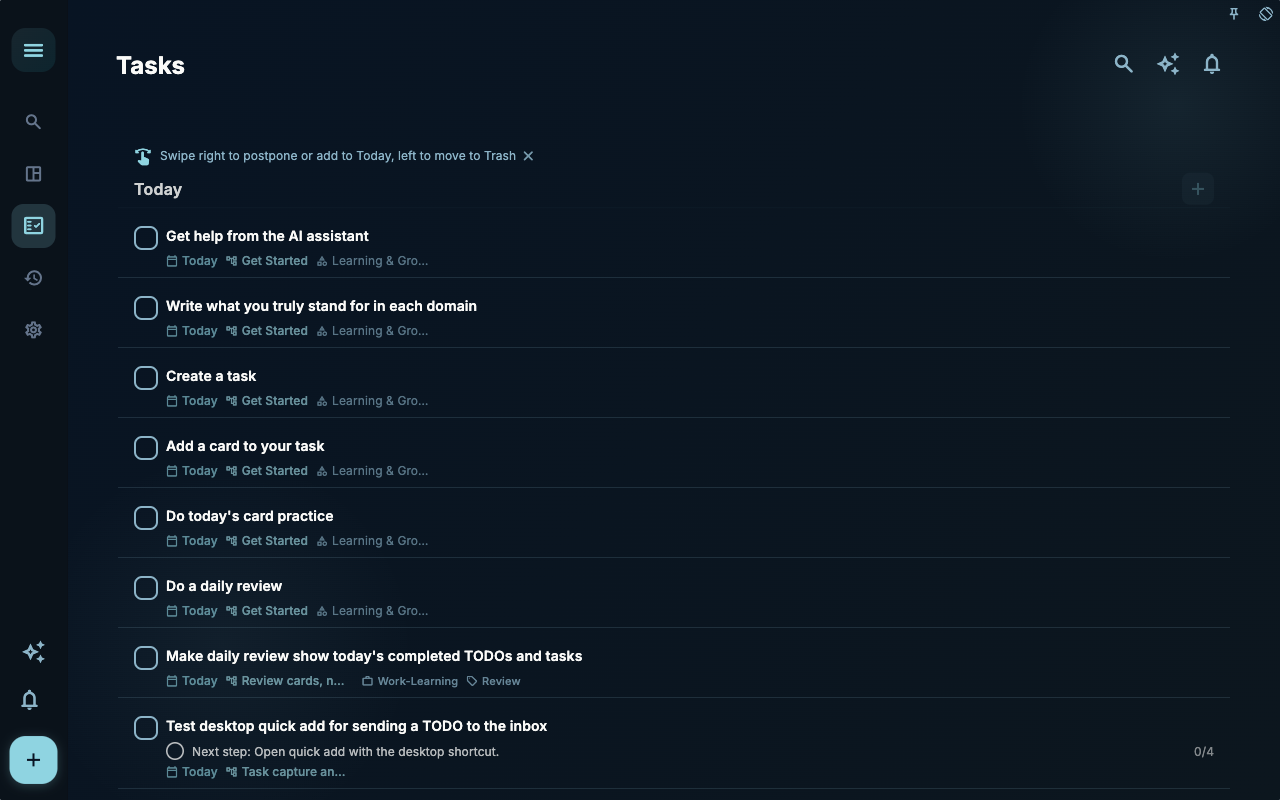
The Task list keeps small actions you can do today. Whether a habit sticks often depends on whether the next step here is small enough to start.
How to Decide the Next Step
Section titled “How to Decide the Next Step”| Your situation | First, check | Next step | | --- | --- | --- | | Don’t know where to start | Current page title and main entry points | Pick only one item related to your current goal | | Wrong result after an action | Status, empty state hints, access logs, or sync progress | Go back one level and troubleshoot step by step | | Worried about affecting data | Backup, sync, account, or permissions documentation | Pause first, confirm scope, then continue |
Boundaries
Section titled “Boundaries”First, make starting easy. Then, make repetition natural.
Next Step
Section titled “Next Step”After this section, return to the task you were working on and choose just one smallest action to continue: log an input, check a status, or open related settings to confirm.